 | Q: I need a quick way to explain to my parents (who will be visiting during the holidays) what is meant by "Parenting Beyond Consequences." They don't seem to understand the way I'm parenting and are quite critical of me. They aren't interested in the neuroscience or the brain research. They're simply coming from the old school of the basics, so any help you have would be appreciated! | ||||||||
| A: Beyond Consequences can be a difficult concept to understand and to "wrap your brain around" when you've been living in a more traditional mindset for years, even generations. Love is about meeting people where they are and respecting their perspectives. Understanding that your parents are looking through the lens of the "old school" is the first place to start. From such a point of reference, this model is sometimes interpreted as if you're coddling or babying your child. The following explanation is written in more general terms in order to help a grandparent, relative, or anyone, begin to make a shift. Remember to be patient with them; you're shifting an entire paradigm and framework of interpretation. Children need unconditional love and unconditional acceptance from their parents; we all know this and believe this. However, do we ever stop to consider how so many of the traditional parenting techniques accepted in our culture work contrary to this primal goal? Traditional parenting techniques that involve consequences, controlling directives, and punishment are fear-based and fear-driven. They have the ability to undermine the parent-child relationship and because they are tied into behavior, children easily interpret these actions to mean, "If I'm not good, I am not lovable." Thus, children often build a subconscious foundation that says that love and approval is based off of performance. Parenting from a love-based paradigm means going beyond our children's behavior and beyond consequences to first see that negative behavior is a form of communication and that negative behavior is a response to stress. If we see the kicking and screaming child as one who is having difficulty regulating due to an overflow of feelings and stress, we can learn to stay present with the child in order to help him modulate these overwhelming feelings and overabundance of stress and thus, help him to build his regulatory system. This is a child who has been "emotionally hijacked." Emotions are not logical or rational; this negative acting-out is the body's natural fear reaction gone awry. Allowing a child emotional space to safely dissipate this energy will then allow him to calm down. As we provide reassurance, unconditional love, and emotional presence for our children, the need to act-out will disappear. Many times our children act-out simply because they do not feel that they are being listened to nor do they feel as if they have been heard. Staying present and reassuring a child that you really are listening to him, can sometimes be enough to help him begin to regulate.The life lesson that the bad behavior is inappropriate does indeed need to be taught and reinforced. However, this life lesson can only happen once the child is fully regulated (when the child is calm) and his cognitive thinking is intact. This is also the time to present alternatives to the negative acting-out behavior. This is how we teach our children instead of punishing them. The definition of discipline is to teach. The more we can stay focused on the relationship with our children and strengthening this relationship instead of controlling it through consequences, logic, and control, the more we will be helping our children learn to work through their stress appropriately. Below are four pointers to going beyond consequences: 1. Just Be Happy!-But I'm not! Did anyone ever tell you, "Just think happy thoughts and it will be okay."? Did it really work? Probably not. Emotions do not simply disappear. If feelings are not acknowledged and released, they are stored and become part of our physical make-up. Research has convincingly shown that being able to express feelings like anger and grief can improve survival rates in cancer patients. With our children, feelings that become stored and "stuffed" become activators for negative behaviors. 2. ALL Feelings are Good Feelings - As parents, it is important for us to understand the necessity of emotional expression, both in teaching it to our children and in modeling it to them. Blocked feelings can inhibit growth, learning, and the building of a trusting relationship between the parent and child. The first step to take is to recognize that ALL emotions are healthy. In our culture, feelings such as joy, peace, and courage are seen as good feelings, yet feelings such as sad, mad, and scared are seen as negative feelings. We must rethink our interpretion so this: Negative feelings don't create acting-out behaviors; it is the lack of expression of the negative feelings that creates the acting out. 3. Get to the Core of the Behavior - When children are acting out and being defiant, we need to begin to understand that their behaviors are simply a communication of an dysregulated state that is driving these behaviors. If we simply address the behavior, we miss the opportunity to help children express and understand themselves from a deeper regulatory and emotional level. We need to help our children build their emotional intelligence. Start by modeling basic feeling words to your child. Keep it simple and teach the five basic feeling words: sad, mad, happy, scared, and grateful. Even the youngest of children can learn to say, "I'm mad!" When the toddler is throwing his toys or the teenager is having his version of a tantrum, encourage him at that moment to get to the core of the behavior through emotional expression. Remember:…it really isn't about the behavior. They really do know better than to do these things. 4. Responding vs. Reacting - So the next time your child becomes defiant, talks back, or is simply "ugly" to you, work to be in a place not to react to the behavior, but respond to your child. Respond to your child in an open way-open to meeting him in his heart and helping him understand the overload of feelings that are driving the behaviors. He doesn't need a consequence or another parental directive at that moment; he just needs you to be present with him (this does not mean you agree with the behavior, it means you are not correlating his behavior with your acceptance of him as a person). As your child learns to respond back to you positively through the parent-child relationship, he won't have the need to communicate through negative behaviors anymore. You'll both have more energy for each other, building a relationship that will last a lifetime and more energy to learn how to do it differently the next time. For more parenting tips, check out some of my videos on Youtube: 1.) Sibling Rivalry 2.) The Missing Piece 3.) The Parent's Stress 4.) Chores 5.) Overwhelm I hope the upcoming holidays are peaceful and loving. And remember, it's not a behavioral problem; it's a regulatory problem! Press on, | |||||||||
 Heather T. Forbes, LCSW Parent and Author of Beyond Consequences, Logic & Control: Volume 1 & Volume 2, Dare to Love, and Help for Billy. | |||||||||

Tuesday, October 25, 2016
Preparing the In-laws and Out-laws for a Holiday Visit


Tuesday, September 27, 2016
When Your Child Hates Everything
 |
Q: My 8-year-old son "hates" everything: the particular car driving down the street, the shirt I'm wearing, the kid next door, the color of the living room, the cashier at the grocery store, etc., etc. I am having trouble understanding this and how to deal with it. Any insights?
A: I'm certain that this is a maddening place to be with your son and that it feels as if nothing will make him happy. There's nothing more frustrating than to try to send positive energy to someone, only to be met with resistance and negativity. | ||||||||
| In order to reverse your child's perception of the world as negative, it will first take a new understanding of why he "hates" everything. When children's needs are met early in their development, their blueprint for the world becomes positive and optimistic. When a baby is crying and sending out stress signals, he is in need of nurturing and comforting care. When this is given to him, his system is shifted back to a state of regulation and the world is a good place-he develops a sense of optimism. If he is not cared for and if he is left on his own to navigate through his internal stress, the world becomes a scary place. Negative repetitious conditioning breeds an outlook of pessimism. No matter how much he cries, no matter what he does, he can't seem to convince his caretakers to help him. Helplessness and overwhelm prevail. For such a child, nothing is working, so his universal blueprint of "nothing is right" is being created. A child who "hates" everything is a child in a perpetual state of fear and dysregulation. His neurophysiological system has been programmed to see the world as half empty instead of half full. He truly doesn't know that everything is going to be all right. He really doesn't know that good always overcomes evil. Essentially, he is programmed to live an operatic tragedy instead of a light-hearted drama. Think about this...isn't it great to simply go to Netflix and pick out what kind of movie you want? Maybe it is a romantic comedy; maybe it is an action movie; maybe even during this Halloween season it is a horror flick. But in our own realities, we don't have the luxury of returning one life and checking out another so quickly. What we do have are three key elements to make significant changes to our life stories: 1) understanding, 2) relationship, and 3) plasticity. The first of these, understanding, was addressed in the beginning of this article. The second, relationships, is something that is always available to initiate. Healing happens in the context of relationships, and most fervently through the context of the parent-child relationship. And third, plasticity, is what an 8-year-old has plenty of. The brain continues to make major changes until we are 25 years old. Your child needs to know that the world is safe and good. In order to do this, it will take creating a deeper relationship with him. It will take helping him to express himself at a deeper level. The next time he makes a negative statement, such as, "I hate the shirt you are wearing," sit with him and listen to him. Ask him more about what he hates. Validate his negativity instead of trying to convince him of something more positive. "You really do hate this shirt. Wow. Help me understand how much you hate it. Tell me more." As he expresses himself, help him shift into the feelings behind these words. (It's really not about the shirt.) "How does that make you feel?" Essentially, his "I hate the world" statements are indicators of his own internal reality: "The world hates me and I don't even deserve to be in this world." When a child (or adult) feels this depth of darkness from within himself, it makes sense as to why all his comments are negative towards his external environment. Think about a time when you were just in a bad mood. Nothing seemed to be right; nothing seemed to be the way you wanted it to be. Your perception of the world matched your negative framework. So, it is the same with your child, simply at a deeper level within the core of his being. When you can help him to move into this core area within himself by listening, validating, maximizing, tolerating, accepting, and staying present with him, you'll be there in relationship to guide him towards feeling safe and loved. Thus, you'll be able to guide him to see that the world is good and hope does exist. It will take positive repetitious conditioning to do this for him (see Beyond Consequences, Logic, and Control, Chapter 3). The reason this works is because our neurological systems are "plastic." We have the ability to change and be molded, especially children. Your son is growing and developing everyday. He still has years ahead of him to create new neuropathways. Every interaction with you is an opportunity to literally change his brain and lay down new neuropatterns of positive thought and positive outlook. Work to stay in a place of understanding, keep yourself regulated, and know that through loving influence, you have the ability to create exactly the environment he needs for healing, hope, and optimism. Press on, | |||||||||
| Heather T. Forbes, LCSW Parent and Author of Beyond Consequences, Logic & Control: Volume 1 & Volume 2, Dare to Love, and Help for Billy. | |||||||||
Monday, August 22, 2016
Teaching Trauma in the Classroom
 | |||||||||
| Childhood trauma happens at both the emotional and psychological level and it can have a negative impact on the child's developmental process. During a traumatic event (abuse, neglect, adoption, accidents, birth trauma, etc.), the lifelong impact is even greater if the child believes he powerless, helpless, and hopeless. When a child experiences one or all of these feelings, he begins to believe the world is dangerous. Repeated experiences of these feelings will create a lasting imprint from which he operates and behaves. A framework based in fear and survival becomes the child's viewpoint of the world around him. These early life experiences then influence the child's ability to "behave," or more correctly expressed, the child's ability to stay "regulated." Trauma impacts a child's ability to stay calm, balanced, and oriented. Instead, children with traumatic histories often find themselves in a "dysregulated" state, which manifests into a child who does not behave, cannot focus, and/or lacks motivation. It is not a matter of choice or a matter of "good" child verses "bad" child; it is simply an imprint from the child's past history. It's the child's new normal. When working with children like this in the classroom, the most effective way to work with them is to work at the level of regulation, relationship, and emotional safety instead of at the level of behavior. These children's issues are not behavioral; they are regulatory. Working at the level of regulation, relationship, and emotional safety addresses more deeply critical forces within these children that go far beyond the exchanges of language, choices, stars, and sticker charts. Traditional disciplinary techniques focus on altering the left hemisphere through language, logic, and cognitive thinking. These approaches are ineffective because the regulatory system is altered more effectively through a different part of the brain known as the limbic system. The limbic system operates at the emotional level, not at the logical level. Therefore, we must work to regulate these children at the level of the limbic system, which happens most easily through the context of human connection. When the teacher says to a non-traumatized child, "Andy, can you please settle down and quietly have a seat?" Andy has the internal regulatory ability to respond appropriately to his teacher because trauma has not interrupted his developmental maturation of developing self-regulation tools and feeling like he is safe in the world. However, when Billy (the traumatized child) is asked the same question, his response is much different. He takes the long way around the classroom to his seat, he continues to not only talk but projects his voice across the room as if he is still out in the playground, and once seated continues to squirm and wiggle. Traditionally, we have interpreted Billy as a disruptive child, pasted the label ADHD (attention deficit hyperactivity disorder) onto him, and reprimanded him for his "naughty" behavior. What we have failed to see is that Billy cannot settle down on his own. His internal system has not experienced the appropriate patterning to know how to be well behaved like his classmate Andy and Billy does not know he is safe in this world, even if he is now in a safe environment. The brain-body system is a pattern-matching machine. A child with little internal self-control will pattern himself according to his past external experiences. If his past experiences have been chaotic, disruptive, and overwhelming (trauma), he will continue acting this way until new patterns are established. Thus, a child coming into a calm and safe classroom is still likely to be acting as if he is in his previous chaotic and unsafe environment. A child can be taken out of trauma but not so easily can the trauma be taken out of the child. Past patterns of chaos are now the current framework for navigating his world; he knows no different. The most effective way to change these patterns comes through safe, nurturing, attuned, and strong human connection. For the student in the classroom, it comes through the teacher-student relationship. The reality is, for our traumatized children to learn and achieve academically, science is showing that they must be engaged at the relational level prior to any academic learning. Press on, | |||||||||
| Heather T. Forbes, LCSW Parent and Author of Beyond Consequences, Logic & Control: Volume 1 & Volume 2, Dare to Love, and Help for Billy. | |||||||||
Tuesday, July 26, 2016
Growing and Healing Through the Struggles
 | From Heather's Daily Reflections: "In order for children to open up to their past trauma memories, the parent has to be willing to be a 'parental sponge'--acknowledging, absorbing, and experiencing every feeling, every tear, and every fear associated with the trauma. Now that is connection!" Q: I just read my first reflection, regarding being a parental sponge and while I agree with the spirit of it, my concern is this: "Experiencing your child's or client's trauma at such an intensity, couldn't that create | ||||||||
| trauma for the person being the 'sponge'?" I feel I am very empathic but how can I do that without hurting myself? A: This is an insightful question. Traditionally, most of us are empathic and give compassion in a way that ultimately drains us. This is because of a core belief that tells us that by giving empathy, we will be able to make this person better or that we have the ability to "fix" the problem for this person. We own that it is up to us to get this person to shift into a calm, peaceful, and regulated state. Their issue then becomes our issue and we stay focused on the outcome of them being better. It becomes a simple mathematical equation. If I give empathy (E), if I listen (L), and if I spend my time with this person (T) , he will be better (B). E + L + T = B Yet, when we give these three and the result is not what we expected, we feel a sense of failure. We turn it back on ourselves and hear the old negative tapes playing in our head, "I didn't try hard enough." "I'm not good enough." "I should have done something different." BAM! The negative feedback loop then feeds on itself right within our own mind. Fatigue, overwhelm, and even resentment begin to brew within our internal selves. In order to be a sponge, the only action we need to take is to simply be present with our child (or friend, spouse, coworker). It is not up to us to make this person better. The reality is that we cannot change or fix another person. We can surround them with support; we can love them unconditionally, free of judgment or control; we can set appropriate boundaries, and we can align with their pain. Yet in doing this, it is still ultimately up to them to make their life work. Additionally, if we enter into an interaction with a child, expecting him to be better, we are actually adding more stress to the equation, which will create more fear and hinder the healing process. We must stay focused on giving our love without expecting anything in return. That is the essential definition of love. Entering into an interaction with an expectation of an outcome is not true love. This is conditional love.Conditional love drains us. Unconditional love energizes and liberates us.So that is the theory and I know you are reading this and wanting some meat to chew on--you want application to your 16-year-old teenager whose girlfriend just dumped him and he is feeling like the entire world is coming to an end. You see how his past abandonment issues are being triggered and how this situation is being magnified due to his early adoption history. Reprogram your thinking to see that what he needs is your support, your attention, and your unconditional acceptance. It is not up to you to make this okay for him. Trust that it is in the struggles of life that we learn and grow to our maximum potential.By being empathetic, by listening, by spending time, and being present with him you are doing EVERYTHING for him. Stay focused on the outcome of you being the absolutely best parent you can be, no matter the outcome of his emotional state at the moment. Your "success" cannot be tied to his feeling better instantaneously. Keep being the sponge for your child's pain. Become energized by the power of putting unconditional love into action. There is no greater state to be in on this planet! Press on, | |||||||||
| Heather T. Forbes, LCSW Parent and Author of Beyond Consequences, Logic & Control: Volume 1 & Volume 2, Dare to Love, and Help for Billy. | |||||||||
Tuesday, June 28, 2016
The Power of Parenting
 | Q: I'm having a difficult time keeping myself focused on parenting in the Beyond Consequences way. I read several of your books and agree with them, but there are days that I feel like it is all for nothing. We have one good day where I think, "Great, this is it." Then the next three days we all are dysregulated and I feel discouraged. I keep thinking that I'd rather go back to my full-time job, working 60 hours a week with deadlines due yesterday! Do you have any words of wisdom? | ||||||||
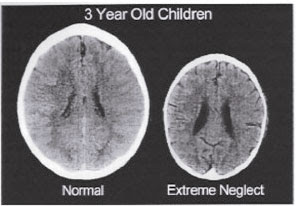
A: A few of days ago, I was attending a small group meeting and in order to introduce a few new members at this group, an icebreaker was given. We were asked to go around the room and instead of telling what we did for a living, we were asked what our parents did for a living when we were growing up. Several of the participants, after describing credentialed careers of high cultural status of their fathers, remarked, "But my mom was just a housewife." Just a housewife! How sad I was to hear this coming from grown men and women who had a parent home with them to support them, guide them, and teach them around the clock. Parenting is the most important job on this planet. You know this, I know this, but there has not been enough recognition in our society. Perhaps this is due to the intangible nature of this job. This job does not have a paycheck, there are no holiday bonuses, and there is no big desk to sit behind with plaques and certificates to recognize the accomplishments or to present the significance of this job to others. Good news - this has changed! We are now living in a time where we can show real, tangible evidence of how important this job of parenting is for children. We now have solid, objective evidence that shows the need and importance of safe, attuned, and supportive parenting. To give you an example, the image below shows the brain scans of two different three-year-olds. On the left side is a healthy three-year-old who has been in a nurturing and loving home his entire life. This child is showing an average size head (50th percentile). On the right side is a three-year-old who suffered severe sensory-deprivation neglect. This child's head is significantly smaller than average (3rd percentile). These images are taken from Dr. Bruce Perry's research ("Childhood Experience and the Expression of Genetic Potential: What Childhood Neglect Tells Us About Nature and Nurture." Brain and Mind 3: 79-100, 2002). | |||||||||
 | |||||||||
While this example is extreme in nature, other examples of research have shown the significance of nurturing care. Research is showing that simple changes in a child's environment can literally change a child's physiology. We are seeing that by placing children with trauma histories in calmer environments with more love-based parenting techniques where a deep level of emotional safety is created, stress hormones within these children's body systems are decreasing. This means that parents have the ability to literally change the chemical make-up of their children (not to mention themselves, as well)! Certainly this is a job is just as powerful as the attorney next door or the mayor of your city. From the research today, our responsibility, or "job description," as parents, is to help our children heal. While not an easy task, it is possible. It takes us changing our perspective not only to understand our children and ourselves, but a change in our understanding as to the significance of parenting. No more "just a housewife." So, instead of waking up in the morning thinking, "I've got to get up, fix my children breakfast, pack their lunches, somehow get them out to school on time through the tantrums and meltdowns, and then prepare myself for the dreaded homework after school!" I encourage you to say to yourself, "Today is the day that I will press on to help change my child's brain. Today is the day that I have the ability to create safety for my child through predictability, understanding, and loving support in order to help my child heal at a physiological and emotional level." Wow! Now that is something worth jumping out of bed for! Press on, | |||||||||
| Heather T. Forbes, LCSW Parent and Author of Beyond Consequences, Logic & Control: Volume 1 & Volume 2, Dare to Love, and Help for Billy. | |||||||||
Thursday, May 26, 2016
Success or Failure
 | Q: I have to say that in the two weeks we used the techniques in the book, my son has gone from occasional and minor non-compliance to a constant source of rude talking, anger, misbehavior and general disruption. As of yesterday we are trying to forget everything we learned in an effort to recover from this catastrophic experiment. I guess it doesn't work for everyone. | ||||||||
| A: I certainly want to address this Email I was sent by a discouraged parent because I know that it can be frustrating and disheartening to see negativity in a home intensify when trying to make positive changes. Implementing a new technique in the home can create disruption for families. A new technique is change and in our children's perspectives, change is inherently bad because something bad is going to happen, thus threatening their relative sense of safety. The Beyond Consequences paradigm is an absolute 180 degree shift from what many families have traditionally used. Yet, an increase in negative behavior can actually be seen as a step in the right direction for families beginning their journey down the Beyond Consequences healing road. Let me explain... We traditionally use behaviors as a gauge to determine whether our child is "good" or "bad." We are a behaviorally and outcome based society, where the behavior determines either success or failure. Unfortunately, we deny the process and only focus on the end result. With sensitive children (i.e., children acting out with defiant and severe behaviors), losing our focus of the process creates fear within us as parents. If we only see a child as being rude, misbehaving, and angry, then all we see is failure. In this example, I want to encourage the parent to see that the change in behavior, albeit an increase in negative behavior, is actually a sign of an improved process. This child is expressing more of himself and sharing his pain and fear with the parent. The child is discharging past trauma. Trauma gets stored in the mind and body of a child and it has to be released. The releasing of trauma is never "pretty." Allowing the discharge of trauma then allows the process of healing to begin. Emotional expession is a learned behavior. Most children coming out of trauma have only learned to express themselves in negative and rude ways. The process of recovery and healing involves first allowing for a short period the child to express in the only way they know how and then tightening up the boundaries around how to express appropriately. It is our job through the interactions with our children to teach them how to express themselves in positive ways. In the beginning, try to think of attitudes and sassiness simply as a communication of a deeper trauma issue, knowing that as you build the relationship and the trust, then it is time to teach and expect better ways of communicating from your child. Now be honest with yourself when answering this question: When you've been stressed out, felt like you are not being heard, and felt completely overwhelmed, did you ever react to those closest to you in a disrespectful, angry, or inappropriate way? I'm thinking your answer is "yes." We act like this when we have no other means to get someone to connect with us and to connect with our needs. I believe that by implementing the Beyond Consequences paradigm in this home, this parent actually created more safety and more emotional space for this child to move out of a hypo-aroused state (inwardly shut-down state) into a hyper-aroused state (outwardly, angry state). By increasing the level of safety, removing the threat of punishment, and responding instead of reacting, this parent created space for this child to express himself. This is a victory. Yet it is only a victory if we stay focused on the process. It is vital to accept that the process may be "ugly" and "uncomfortable" and yes, "disrespectful" (as seen from the traditional model) but if we truly understand that our children need to time discharge the trauma and "unlearn" poor communication skills, it should not be difficult to accept this as part of the healing process. Meeting our children exactly where they are is the only way to move them forward to bring them exactly where we think they should be. When a child shifts from a hypo-aroused to hyper-aroused state, celebrate. Yes, celebrate that tantrums are happening! Finally, the child is venturing out of his/her shell and is getting out the fear, pain, and stress instead of keeping it locked down. This is the healing moment. This is the opportunity to reach in and connect with the child in order to demostrate through experience what a safe relationship with a parent can be like. Creating emotional safety and space for emotional expression is scary and it takes courage. I do believe that love works for everyone. It is simply a matter of focusing on the relationship, focusing on the process of trauma recovery, and giving our children time to re-learn appropriate ways to express their emotions. In doing so, the ONLY possible outcome to follow will be "good behavior." Press on, | |||||||||
| Heather T. Forbes, LCSW Parent and Author of Beyond Consequences, Logic & Control: Volume 1 & Volume 2, Dare to Love, and Help for Billy. | |||||||||
Tuesday, April 26, 2016
Uncertainty Breeds Resistance
 | Q: What do you do with a child who is so compelled to a repetitious behavior that he can't be redirected to the task at hand? A: As humans, one of our basic primal needs is that of certainty. It feels good to know for certain what is going to happen, when it is going to happen, and how it is going to happen. We also seek certainty through our behaviors and actions. For some, repetitive behaviors create certainty which reduces the level of internal fear. OCD (obsessive compulsive disorder) is about an intense need for certainty. For others, food creates certainty. Food makes us feel good, thus gives us an instant feeling of certainty. | ||||||||
| Additionally, many parents seek certainty through controlling parenting techniques. On the other hand, uncertainty is a basic human need as well but only if there is enough certainty in our lives to create a balance between the two. For most of us, we enjoy an occasional surprise, it creates excitement. We like change, to a small degree, because it creates variety in our lives. For some, a higher level of uncertainty creates a rush of being "alive" like riding a roller coaster, watching a scary movie, or even jumping out of an airplane. For children with traumatic histories, they have experienced an over abundance of uncertainty. There has not been a balance between the amount of uncertainty and certainty in their lives. If an imbalance of the two creates a level of fear for the average adult then it is understandable for a child, with limited coping skills, such an imbalance creates an exponential amount of fear. The result is a child who will constantly seek certainty, at all costs. He is working to live in a heightened state of certainty in order to calm the fear of uncertainty that is programmed in his nervous system. When we as parents then try to redirect this behavior, we are creating yet more uncertainty. The child, in his desperate attempt to return to a state of balance and regulation, will resist the parent and refuse to be redirected. The parent typically interprets this as "bad" behavior, "defiant" behavior, or "disrespectful" behavior. Worse, the parent takes this lack of responsiveness personally as if the child is behaving in this manner simply to push the parent's button or to be revengeful. The negative neurological feedback loop is thus in full swing. Both the parent and the child are working to attain certainty, yet they are both doing it from a self-absorbed framework. The relationship becomes more strained, thus breeding more uncertainty! If the parent can understand that the child is simply working to create certainty in his uncertain world, this negative loop can easily be interrupted. The parent can acknowledge that the compelling behavior (as given in this question) is helping the child feel better and that switching to a new task is incredibly difficult and scary. A conversation might look like this: Parent: "Tommy, it is going to be time for us to go out and rake leaves in a few minutes."The parent works to connect with Tommy's fears and acknowledges his struggle of shifting to a different activity. The parent creates certainty by being with him now while promising to be with him during the new activity. Through their relationship, the parent is working to create the certainty he is seeking through the toy cars. The parent's goal is to help Tommy shift from using the toys as security to using the relationship with him as the security. Giving him five minutes also gives Tommy emotional space to consider making this change and time to process this change, which reduces the element of surprise. As human beings, we are constantly working to create balance in our lives. Your children's behaviors are often times reflective of this need for balance. Look beyond the typical interpretations of defiance, disrespect, and retaliation, to identify the significance of your child's behaviors.When you can do this, you put yourself in the most powerful position - the position of a committed, loving, and understanding parent! Press on, | |||||||||
| Heather T. Forbes, LCSW Parent and Author of Beyond Consequences, Logic & Control: Volume 1 & Volume 2, Dare to Love, and Help for Billy. | |||||||||
Subscribe to:
Posts (Atom)