 | Q: I'm having a difficult time keeping myself focused on parenting in the Beyond Consequences way. I read several of your books and agree with them, but there are days that I feel like it is all for nothing. We have one good day where I think, "Great, this is it." Then the next three days we all are dysregulated and I feel discouraged. I keep thinking that I'd rather go back to my full-time job, working 60 hours a week with deadlines due yesterday! Do you have any words of wisdom? | ||||||||
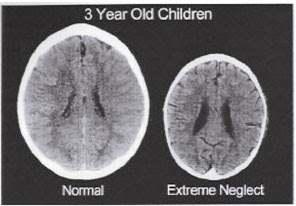
A: A few of days ago, I was attending a small group meeting and in order to introduce a few new members at this group, an icebreaker was given. We were asked to go around the room and instead of telling what we did for a living, we were asked what our parents did for a living when we were growing up. Several of the participants, after describing credentialed careers of high cultural status of their fathers, remarked, "But my mom was just a housewife." Just a housewife! How sad I was to hear this coming from grown men and women who had a parent home with them to support them, guide them, and teach them around the clock. Parenting is the most important job on this planet. You know this, I know this, but there has not been enough recognition in our society. Perhaps this is due to the intangible nature of this job. This job does not have a paycheck, there are no holiday bonuses, and there is no big desk to sit behind with plaques and certificates to recognize the accomplishments or to present the significance of this job to others. Good news - this has changed! We are now living in a time where we can show real, tangible evidence of how important this job of parenting is for children. We now have solid, objective evidence that shows the need and importance of safe, attuned, and supportive parenting. To give you an example, the image below shows the brain scans of two different three-year-olds. On the left side is a healthy three-year-old who has been in a nurturing and loving home his entire life. This child is showing an average size head (50th percentile). On the right side is a three-year-old who suffered severe sensory-deprivation neglect. This child's head is significantly smaller than average (3rd percentile). These images are taken from Dr. Bruce Perry's research ("Childhood Experience and the Expression of Genetic Potential: What Childhood Neglect Tells Us About Nature and Nurture." Brain and Mind 3: 79-100, 2002). | |||||||||
 | |||||||||
While this example is extreme in nature, other examples of research have shown the significance of nurturing care. Research is showing that simple changes in a child's environment can literally change a child's physiology. We are seeing that by placing children with trauma histories in calmer environments with more love-based parenting techniques where a deep level of emotional safety is created, stress hormones within these children's body systems are decreasing. This means that parents have the ability to literally change the chemical make-up of their children (not to mention themselves, as well)! Certainly this is a job is just as powerful as the attorney next door or the mayor of your city. From the research today, our responsibility, or "job description," as parents, is to help our children heal. While not an easy task, it is possible. It takes us changing our perspective not only to understand our children and ourselves, but a change in our understanding as to the significance of parenting. No more "just a housewife." So, instead of waking up in the morning thinking, "I've got to get up, fix my children breakfast, pack their lunches, somehow get them out to school on time through the tantrums and meltdowns, and then prepare myself for the dreaded homework after school!" I encourage you to say to yourself, "Today is the day that I will press on to help change my child's brain. Today is the day that I have the ability to create safety for my child through predictability, understanding, and loving support in order to help my child heal at a physiological and emotional level." Wow! Now that is something worth jumping out of bed for! Press on, | |||||||||
 Heather T. Forbes, LCSW Heather T. Forbes, LCSWParent and Author of Beyond Consequences, Logic & Control: Volume 1 & Volume 2, Dare to Love, and Help for Billy. | |||||||||

Tuesday, June 28, 2016
The Power of Parenting


Thursday, May 26, 2016
Success or Failure
 | Q: I have to say that in the two weeks we used the techniques in the book, my son has gone from occasional and minor non-compliance to a constant source of rude talking, anger, misbehavior and general disruption. As of yesterday we are trying to forget everything we learned in an effort to recover from this catastrophic experiment. I guess it doesn't work for everyone. | ||||||||
| A: I certainly want to address this Email I was sent by a discouraged parent because I know that it can be frustrating and disheartening to see negativity in a home intensify when trying to make positive changes. Implementing a new technique in the home can create disruption for families. A new technique is change and in our children's perspectives, change is inherently bad because something bad is going to happen, thus threatening their relative sense of safety. The Beyond Consequences paradigm is an absolute 180 degree shift from what many families have traditionally used. Yet, an increase in negative behavior can actually be seen as a step in the right direction for families beginning their journey down the Beyond Consequences healing road. Let me explain... We traditionally use behaviors as a gauge to determine whether our child is "good" or "bad." We are a behaviorally and outcome based society, where the behavior determines either success or failure. Unfortunately, we deny the process and only focus on the end result. With sensitive children (i.e., children acting out with defiant and severe behaviors), losing our focus of the process creates fear within us as parents. If we only see a child as being rude, misbehaving, and angry, then all we see is failure. In this example, I want to encourage the parent to see that the change in behavior, albeit an increase in negative behavior, is actually a sign of an improved process. This child is expressing more of himself and sharing his pain and fear with the parent. The child is discharging past trauma. Trauma gets stored in the mind and body of a child and it has to be released. The releasing of trauma is never "pretty." Allowing the discharge of trauma then allows the process of healing to begin. Emotional expession is a learned behavior. Most children coming out of trauma have only learned to express themselves in negative and rude ways. The process of recovery and healing involves first allowing for a short period the child to express in the only way they know how and then tightening up the boundaries around how to express appropriately. It is our job through the interactions with our children to teach them how to express themselves in positive ways. In the beginning, try to think of attitudes and sassiness simply as a communication of a deeper trauma issue, knowing that as you build the relationship and the trust, then it is time to teach and expect better ways of communicating from your child. Now be honest with yourself when answering this question: When you've been stressed out, felt like you are not being heard, and felt completely overwhelmed, did you ever react to those closest to you in a disrespectful, angry, or inappropriate way? I'm thinking your answer is "yes." We act like this when we have no other means to get someone to connect with us and to connect with our needs. I believe that by implementing the Beyond Consequences paradigm in this home, this parent actually created more safety and more emotional space for this child to move out of a hypo-aroused state (inwardly shut-down state) into a hyper-aroused state (outwardly, angry state). By increasing the level of safety, removing the threat of punishment, and responding instead of reacting, this parent created space for this child to express himself. This is a victory. Yet it is only a victory if we stay focused on the process. It is vital to accept that the process may be "ugly" and "uncomfortable" and yes, "disrespectful" (as seen from the traditional model) but if we truly understand that our children need to time discharge the trauma and "unlearn" poor communication skills, it should not be difficult to accept this as part of the healing process. Meeting our children exactly where they are is the only way to move them forward to bring them exactly where we think they should be. When a child shifts from a hypo-aroused to hyper-aroused state, celebrate. Yes, celebrate that tantrums are happening! Finally, the child is venturing out of his/her shell and is getting out the fear, pain, and stress instead of keeping it locked down. This is the healing moment. This is the opportunity to reach in and connect with the child in order to demostrate through experience what a safe relationship with a parent can be like. Creating emotional safety and space for emotional expression is scary and it takes courage. I do believe that love works for everyone. It is simply a matter of focusing on the relationship, focusing on the process of trauma recovery, and giving our children time to re-learn appropriate ways to express their emotions. In doing so, the ONLY possible outcome to follow will be "good behavior." Press on, | |||||||||
| Heather T. Forbes, LCSW Parent and Author of Beyond Consequences, Logic & Control: Volume 1 & Volume 2, Dare to Love, and Help for Billy. | |||||||||
Tuesday, April 26, 2016
Uncertainty Breeds Resistance
 | Q: What do you do with a child who is so compelled to a repetitious behavior that he can't be redirected to the task at hand? A: As humans, one of our basic primal needs is that of certainty. It feels good to know for certain what is going to happen, when it is going to happen, and how it is going to happen. We also seek certainty through our behaviors and actions. For some, repetitive behaviors create certainty which reduces the level of internal fear. OCD (obsessive compulsive disorder) is about an intense need for certainty. For others, food creates certainty. Food makes us feel good, thus gives us an instant feeling of certainty. | ||||||||
| Additionally, many parents seek certainty through controlling parenting techniques. On the other hand, uncertainty is a basic human need as well but only if there is enough certainty in our lives to create a balance between the two. For most of us, we enjoy an occasional surprise, it creates excitement. We like change, to a small degree, because it creates variety in our lives. For some, a higher level of uncertainty creates a rush of being "alive" like riding a roller coaster, watching a scary movie, or even jumping out of an airplane. For children with traumatic histories, they have experienced an over abundance of uncertainty. There has not been a balance between the amount of uncertainty and certainty in their lives. If an imbalance of the two creates a level of fear for the average adult then it is understandable for a child, with limited coping skills, such an imbalance creates an exponential amount of fear. The result is a child who will constantly seek certainty, at all costs. He is working to live in a heightened state of certainty in order to calm the fear of uncertainty that is programmed in his nervous system. When we as parents then try to redirect this behavior, we are creating yet more uncertainty. The child, in his desperate attempt to return to a state of balance and regulation, will resist the parent and refuse to be redirected. The parent typically interprets this as "bad" behavior, "defiant" behavior, or "disrespectful" behavior. Worse, the parent takes this lack of responsiveness personally as if the child is behaving in this manner simply to push the parent's button or to be revengeful. The negative neurological feedback loop is thus in full swing. Both the parent and the child are working to attain certainty, yet they are both doing it from a self-absorbed framework. The relationship becomes more strained, thus breeding more uncertainty! If the parent can understand that the child is simply working to create certainty in his uncertain world, this negative loop can easily be interrupted. The parent can acknowledge that the compelling behavior (as given in this question) is helping the child feel better and that switching to a new task is incredibly difficult and scary. A conversation might look like this: Parent: "Tommy, it is going to be time for us to go out and rake leaves in a few minutes."The parent works to connect with Tommy's fears and acknowledges his struggle of shifting to a different activity. The parent creates certainty by being with him now while promising to be with him during the new activity. Through their relationship, the parent is working to create the certainty he is seeking through the toy cars. The parent's goal is to help Tommy shift from using the toys as security to using the relationship with him as the security. Giving him five minutes also gives Tommy emotional space to consider making this change and time to process this change, which reduces the element of surprise. As human beings, we are constantly working to create balance in our lives. Your children's behaviors are often times reflective of this need for balance. Look beyond the typical interpretations of defiance, disrespect, and retaliation, to identify the significance of your child's behaviors.When you can do this, you put yourself in the most powerful position - the position of a committed, loving, and understanding parent! Press on, | |||||||||
| Heather T. Forbes, LCSW Parent and Author of Beyond Consequences, Logic & Control: Volume 1 & Volume 2, Dare to Love, and Help for Billy. | |||||||||
Thursday, March 31, 2016
This is Your Brain on Trauma
 | ||||||||
A: The art and skill of organizing takes a well-developed brain. The prefrontal cortex is the area of thebrain that gives us the ability to plan, organize, and problem solve. To keep a room clean and in order, it takes all three of these skills. Science tells us that this area is one of the last areas of the brain to mature and it can take up to 25 years for someone to fully develop his or her prefrontal cortex when living in an optimal environment for all of those 25 years. Early childhood trauma can severely impact how the brain develops throughout the entire developmental journey into adulthood, even if the child is taken out of trauma and placed in a loving and positive environment. The early wiring of the brain, as in your daughter's case from birth to three years old (and perhaps even in-utero), will influence how the brain continues to develop throughout her life, especially in her teenage years. While it is very frustrating as a parent to continually see your child's room resemble a war zone, I believe one of the best ways to curb this frustration is to understand what trauma does to a child's brain. It isn't that your child "won't" keep her room clean, it's that she "can't" keep her room clean (at least not yet..there's still time for the brain to develop). In the late 80's, you may remember the commercial for the anti-drug campaign that showed an egg on a hot frying pan with the slogan, "This is your brain on drugs." I'll take the creative liberty here to modifythis for our children impacted by trauma to say, "This is your brain on trauma." | ||||||||||
 | ||||||||||
| When you see your daughter's room, simply repeat this phrase in your head, over and over again. It will help keep you from being reactive, frustrated, and feeling as if she is just being lazy, defiant, or unappreciative. It truly is why she is having such a difficult time. Trauma also puts children in a place where they get overwhelmed very easily. Perhaps you helped her clean and organize her room a few months ago but once a few things were left on the floor, then a few more, and then a few more, in a very short amount of time, a point of no return was reached. The quick build-up of mess would easily have gotten her so overwhelmed and stressed-out that she simply had to shut-down the idea of cleaning it up again. Additionally, some children with histories of trauma often have a hard time throwing items away. What may look like trash to you, is not trash to them. Objects, and I mean any objects, are tangible and they can represent value. And most importantly, they represent security. If you felt safer surrounding yourself with items of value, you too would most likely completely fill your room with items, no matter the mess. Even with these explanations, I still believe it is our duty as parents to help our children overcome the deficiencies they have in keeping a room organized. First, you must let go of the negativity and accept the disorder and chaos in her room as a byproduct of trauma. Then, work with your daughter to help her organize. This may require dropping your expectations of her being able to do it on her own because she is 16-years-old. When your offer to help is free from anger, frustration, and disapproval, she is more likely to be able to accept your help. Chunking the task of cleaning her room into smaller segments at a time can help to minimize the overwhelm. Start with just the dresser one day. The next day, tackle underneath the bed (or maybe that will take two days!). Then move to the closet, and so on. This may be something you need to do with her for several months or maybe even a year or two years. You'll be setting into motion new patterns and new habits, which will eventually lay down new neuropathways in the brain. No matter how long it takes, just keep saying to yourself, "This is your brain on trauma." and I know you'll get there! Trust in the process and trust that love will never fail. Press on, | ||||||||||
| Heather T. Forbes, LCSW Parent and Author of Beyond Consequences, Logic & Control: Volume 1 & Volume 2, Dare to Love, and Help for Billy. | ||||||||||
Thursday, February 25, 2016
Blueprints
 | Q: My child's early years were spent in a home that was chaotic and unpredictable. Later, he lived in several foster care homes before coming to live with us. Today is our four-year anniversary of being adopted but I find myself still frustrated on a daily basis. After four years, he still continues to be a disruptor in our home and anything I do to try to make life a positive experience for him, he flips it around to be negative and chaotic. Please help! | ||||||||
| A: Congratulations on your four-year adoption anniversary! One of the first thoughts that came to mind when I read your question was that you can take a child out of the trauma, but getting the trauma out of the child takes much effort. Your child's early history impacted his blueprint of the meaning of family and of life. When children grow up in traumatic homes, that kind of environment is the familiar and they come to believe this is "normal." They just assume that this is the way life is for everybody. A deep subconscious imprint is formed and they live out of this blueprint for the rest of their lives, unless it is consciously changed. For children growing up in the type of environment your son experienced, their definition of what love and family means is skewed and distorted. Listed in the left-hand column are words that describe your son's early blueprint of love and family. Conversely, children who grow up in loving, predictable, and emotionally sensitive homes, develop blueprints for love and family that are much more in line with reality. In the right-hand column below are words that define what these children perceive as love and family. | |||||||||
 | |||||||||
| Your son is still living out of this early blueprint, despite being in your home for four years. That is why it feels like he is sabotaging and disrupting everything you do to create a loving environment for him. Your family is uncomfortably juxtaposed between the left-hand column and the right-hand column listed in the chart above. Some children learn to redefine their blueprints simply through repetition and time. Other children, however, need more intentional and conscious work to finally let go of distorted blueprints. Why? It all depends on the depth of the trauma, the child's perception of the traumatic experiences, and the child's personality type. It isn't a reflection of you being a "good" or "bad" parent. It's just the nature of trauma. Bringing a negative blueprint up to the child's conscious awareness can be a valuable exercise in helping him change these early definitions. Take a large sheet of white poster board or paper and draw the chart given above. When your son is in a calm state, go through these two sides of the chart with him. Add in more about his early life story and help him see that what he experienced years ago is influencing his life today. Tell him that your job is to help him learn what the true definition of family is. It also helps to take responsibility for not being there early on to protect him from these traumatic experiences. Although it wasn't your "fault," our children need someone to take responsibility for what happened to them in order for them to move forward in their healing journeys. When you can say, "I'm so sorry I wasn't there to protect you and give you everything you deserved as a baby/toddler. I so wish I was able to have been there for you!" from a heart-centered, authentic place, it helps him to know you really understand him. Keep this poster up in your house and when he starts to go back into these old patterns and that old blueprint takes over, lovingly remind him of what true family is all about. It is important to not just talk about this old blueprint but to show it visually, as shown in this chart. Most children with trauma need visual communication along with auditory communication to have it make more sense and for it to be retained within their memory systems. Trauma recovery is a life-long developmental process. Keep connecting with the left-hand column to understand how to bring him into the right-hand column! Press on, | |||||||||
| Heather T. Forbes, LCSW Parent and Author of Beyond Consequences, Logic & Control: Volume 1 & Volume 2, Dare to Love, and Help for Billy. | |||||||||
Wednesday, December 2, 2015
Sibling Rivalry
 | Q: My son is constantly fighting with his younger sister. They can't seem to ever get along. How do I put an end to this negative behavior? A: Whenever you want to stop a behavior in a family, always ask yourself, "What is driving this behavior?" Getting to the root cause, rather than addressing just the behavior, will lead you to the solution. Typically, however, we tend to ask the wrong question when addressing a child's negative behavior. We ask, | ||||||
| "How do I stop this (or put an end to this) negative behavior?" If you ask the wrong question, you're going to get the wrong answer. In this instance, the "right" question would be, "What is driving the sibling rivalry?" Traditionally, we have seen sibling rivalry as a conflict between the children. Countless parenting resources describe sibling rivalry as jealous and competitive fighting between brothers and sisters. This is not the root cause. Sibling rivalry is driven from the lack of relationship or the lack of security that children have with their parents. Hence, sibling rivalry is between the parent and child, not child and child. For example, if your Billy is mean and upset with his sister Sally, is it really between Billy and Sally? No. Billy's interpretation and perception is that his parents love Sally more. If Billy "gets rid of Sally" or picks on Sally, then the love will go to him, not his sister. Billy sees love as a commodity--there is only a limited supply. In his eyes, if Sally is getting the love, then there won't be enough for him. Billy is creating attention for himself; he is creating relationship but in a negative way. What we have to remember is that any form of attention, whether positive or negative, satisfies a child's need for attention, connection and love. Billy is working to calm his internal need for parental connection through a negative means. This leads us to the solution. What Billy actually needs is time with his parent(s) in order to help him feel special, wanted, good enough, and loved. Spending more individual time with Billy will give him the attention he has been seeking all along. When the relationship between each child and the parent(s) becomes more secure and more deeply connected, the need for Billy to create negative attention dissipates and in many cases, disappears altogether. Another strategy to help Billy learn that he is unconditionally loved is to address his attacks on Sally in the moment. When Billy is being mean to Sally, instead of rejecting Billy by sending him away to his room, he needs you to bring him closer to you, giving him more security. When you can truly see that behavior is a form of communication, it will make sense to do this instead of being scared you are rewarding Billy for bad behavior. Billy NEEDS attention in order to calm his nervous system and to secure his place in the family system. Remember, the true issue behind sibling rivalry is the lack of relationship. Your goal is to decrease Billy's fear and stress and to create connection with him. Don't mention his behavior in the moment (you'll have a chance later to teach the life lesson) but focus on how you can calm his nervous system and secure him in relationship. Traditional techniques are actually damaging because, for a child like Billy, sending him away to his room and punishing him actually create more insecurity and more rejection. If we want our children to heal and improve their behaviors, we can't be creating more of the same. The dictionary defines "discipline" as "Training expected to produce a specific character or pattern of behavior, especially training that produces moral or mental improvement." To discipline Billy for this behavior means to teach him a new pattern that is morally right. Some children don't know any other way to solve conflicts other than by fighting. A conversation with Billy might sound like this: Dad is working to take away the fear and the punishment. Dad's "discipline goal" is to teach and guide Billy to develop a better way through the influence of the parent/child relationship and to help Billy communicate his need for attention more effectively.Dad: "Billy, when you get frustrated and aggregated with Sally, instead of hitting her or taking her toy (because this is NOT okay to do in our family), I want you to come to me so I can help you feel safe. You're not in trouble. My job as your daddy is to help you find a better way so everybody is okay and nobody gets hurt in this family." Dad also helps Billy learn to communicate his feelings and to express his needs to his parents through verbal communication instead of acting out negatively. There are five basic feeling words children of almost any age can learn, "I'm mad, sad, glad, scared, or happy." Opening the lines of emotional communication is one of the keys to helping any child through almost any behavior. Put love into action to secure your little Billy and you'll spend more quality and fun time instead of breaking up all the fights! Press on, | |||||||
| |||||||
| Heather T. Forbes, LCSW Parent and Author of Beyond Consequences, Logic & Control: Volume 1 & Volume 2, Dare to Love, and Help for Billy. | |||||||
Wednesday, October 28, 2015
The Power of Neurological Mapping
 | Q: My son had a terrible early childhood history and constantly tells me he is a bad boy and that nobody loves him. Yet, no matter how much we tell him what a good boy he is or how much we love him, nothing seems to help. How can he continually reject these positive messages? A: From the moment a child is born, he is dependent on others to care for him, nurture him, and teach him about the world. This child has no other option but to trust that the information being given to him is the truth. He has no filters...he accepts everything as fact. | ||||||
For a child who goes through early childhood trauma, he lives in a world of false messages that are absorbed as truth. Everything that is said to him becomes his reality. Everything that is done to him becomes a reflection of who he is. For example, if a child is emotionally abused and told he is worthless, that he won't amount to anything, or that the parent wishes he was never born, this child's internal belief system develops from these messages. This child believes he is worthless and unworthy. His belief is that he is not lovable and that he should not be on the planet Earth. Neurologically, we know that neurons that fire together wire together. So this belief system becomes ingrained and accepted at a deep subconscious and neurological level. These beliefs lay down the neural circuitry that governs how this child behaves and responds to life events. We then place this child in a different, more loving family. He is told that he is wonderful, that he is good, and that he is loved. The external messages are now in conflict with the internal messages. Which one do you think is stronger and louder? The internal voice of negativity was an earlier and deeper imprint, thus it will be the dominate one. This creates a profound gap between what others are saying and what the child's internal framework is saying, preventing this child from easily accepting any new messages beyond that which he already knows.The human brain is programmed to reject any belief that is not congruent (not the same) as one’s own view. Think about this from your own perspective. When someone comes up with a different belief than you have, what is your first reaction? You reject it. You dismiss this person as being on the fringe and you move on, maintaining your own reality in your mind. You might even argue with this person, defending your position in order to "save face" and to protect your own belief system. Back to the child in this example, the parent then tries to lovingly parent this child and to give this child positive messages of self-esteem and self-worth. Yet, what the parent doesn't realize is that the parent is up against the power of belief--up against the child's neurological mapping. No matter how many times this parent tells his new son, "I love you" or "You are a wonderful child" or similar positive messages, the old belief system of not being worthy and not being good enough continues to prevail. It is as if these messages are impervious to this child. These positive messages simply slide off the child as if there is a Teflon coating. The reason is that these new messages are being given to the child at a cognitive level and are simply cognitive experiences. Yet, emotions play a powerful role in neural processing, much greater than language and cognition. In order to break through the old negative beliefs of this child, the parent has to dig deep within himself to interact with this child at a deeply profound emotional level. Love has the power to do this. While the emotion of fear keeps this child locked in this negative belief system, it is also true that the emotion of love will release this child from this negative belief system. It takes parenting this child in a loving, safe, and emotionally available manner. And it won't be just one experience, but several experiences, over and over again, with this child being met at an emotional level, in order for new neural pathways to be created. A new belief system is possible. It takes time, patience, understanding, tolerance, perseverance, and most importantly, emotional impact. For more "what to do in the moment" and more explanation on how to do this in the classroom setting, my book, "Help for Billy" will give you more application into the principles discussed in this eNewsletter. Love never fails...it simply takes learning how to love our children from their perspective and going beyond routine cognitive experiences. Press on, | |||||||
 | |||||||
| Heather T. Forbes, LCSW Parent and Author of Beyond Consequences, Logic & Control: Volume 1 & Volume 2, Dare to Love, and Help for Billy. | |||||||
Subscribe to:
Posts (Atom)